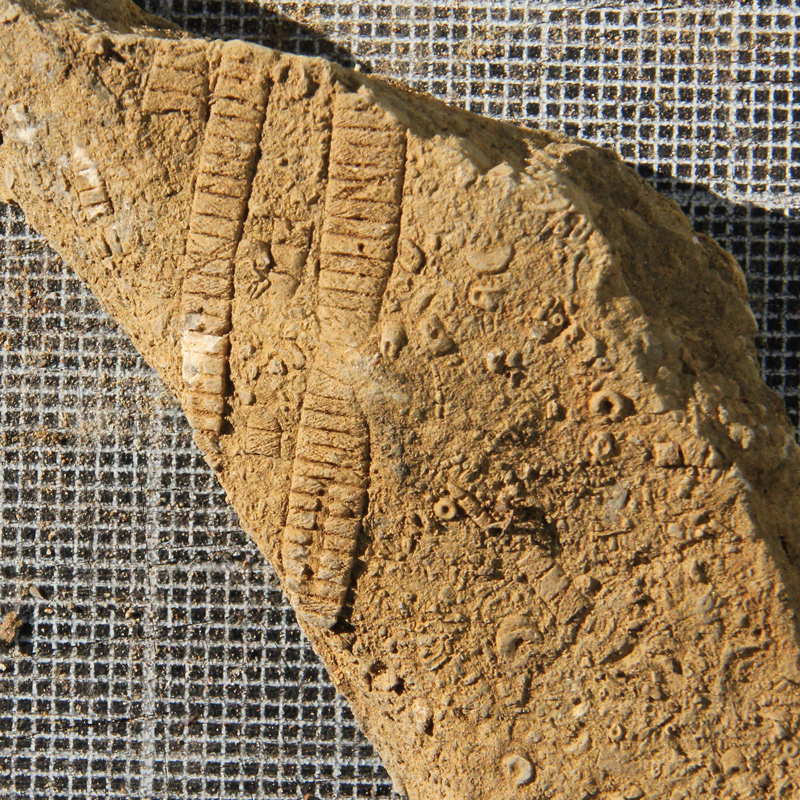
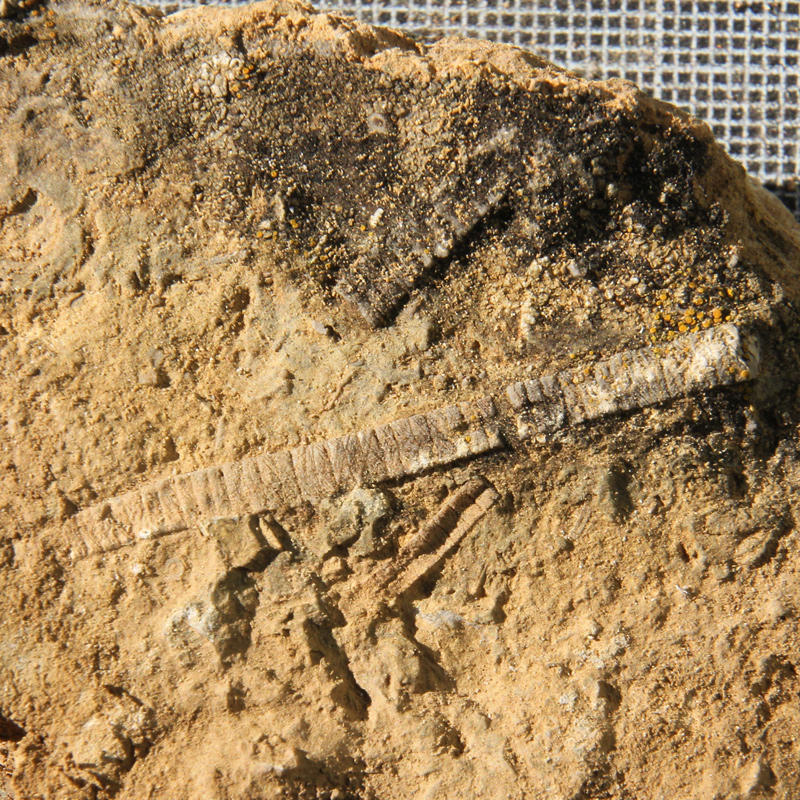
Crinoid-6
This Crinoid is from the Silurian.
Fossils of Australia

Crinoids
Crinoids have an external skeleton made of calcium carbonate plates covered by a thin skin. The plates are held together with ligaments or muscles. Crinoids are the oldest of the living echinoderms with a fossil record stretching back 450 million years. Most Crinoids were filter feeders consuming plankton and decaying organic matter. To feed they spread their feeding arms to sieve the passing sea water for microscopic organisms. Living relatives include Feather stars and Sea lilies.

Themnopora
This is Thamnopora from Silurian limestone. Thamnopora is a branching tabulate coral. The name tabulate refers to the tabulae, horizontal
elements visible in longitudinal section. All tabulate corals are colonial.
http://home.gli.cas.cz/hladil/www/015.pdf
http://en.wikipedia.org/wiki/Tabulate_coral

graptolites
Graptolites were planktonic and floated in the upper part of the ocean waters. There external skeleton was made of organic material (chitine). Graptolites formed colonies by asexual reproduction.
Graptolites are seen prodominantly from the Cambrian Period (542 million to 488 million years ago) and that persisted into the Early Carboniferous Period (359 million to 318 million years ago). This Graptolite is from the Silurian. NSW, Australia.
http://en.wikipedia.org/wiki/Graptolithinia

graptolites
Graptolites were planktonic and floated in the upper part of the ocean waters. There external skeleton was made of organic material (chitine). Graptolites formed colonies by asexual reproduction.
Graptolites are seen prodominantly from the Upper Cambrian through the Lower Carboniferous. This Graptolite is from the Silurian.
http://en.wikipedia.org/wiki/Graptolithinia

graptolites
Graptolites were planktonic and floated in the upper part of the ocean waters. There external skeleton was made of organic material (chitine). Graptolites formed colonies by asexual reproduction.
Graptolites are seen predominantly from the Upper Cambrian through the Lower Carboniferous. This Graptolite is from the Silurian.

Bryozoa-2
Polypora ehrenbergi. This Brtozoan formed in a funnel shaped. Like other \’Moss animals\’ this bryozoan was formed by small zooids that formed a colony. Fossil found along the South Coast of NSW.

Bryozoa-1
Bryzoa are colonial animals that lived primarily in the sea. Every indevidual polypid or zooid in the colony secretes a calcareous, chitinous or membrane case around itself.

This brachiopod fossil is a rare example of the Spiny brachiopod Class: Lingulata (Order: Siphonotretida, stem group brachiopods)
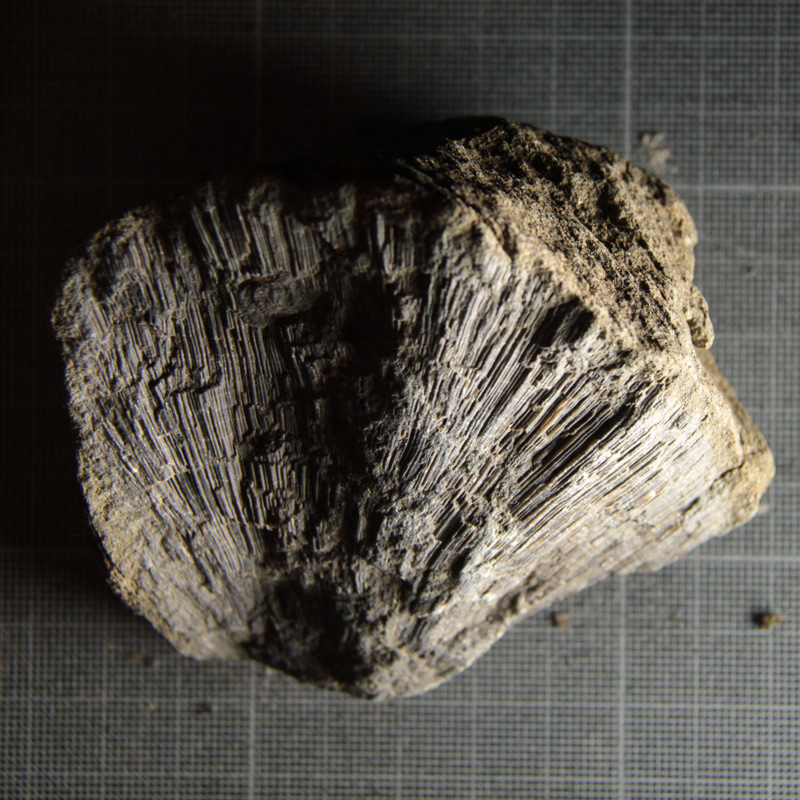
Bryozoan
Stenopora bryozoan was an aquatic invertebrate similar to coral but belong to a completely different phylum. They individual tubules of the ‘fan’ were inhabited by small colonial animals called zooids. The zooids were filter feeders that fed on organic particles washed around by the ocean currents. Specimen from the South Coast of NSW.

Spiriferid are brachiopods filtering feeders that fed on organic particles washed around by the ocean currents. The valves (each shell side) has pronounced folds and sulcus (furrow, fissures). They lived in mud by anchoring to the sea floor with a fleshy stalk called a pedicle that protruded from the shell’s hinge. Specimen from the South Coast of NSW.


Marine bivalve mollusc filter feeder lived in shallow marine environments attaching themselves to rocks or hard surfaces. They have compressed bodies enclosed by a shell in two hinged parts and are similar is shape to the Shell Oil logo and are related to clams, oysters, mussels. Specimen from the South Coast of NSW.
http://en.wikipedia.org/wiki/Bivalve_molluscs