Silurian · Carboniferous · Permian
Four hundred million years of Australian sea floor.
A photographic reference catalogue of 63 fossils collected in New South Wales — the corals and trilobites of a Silurian reef at Yass, a Carboniferous shore in the Hunter, and the cold Permian seas and Glossopteris swamps of the Sydney Basin. Every specimen is listed with its classification, its locality and the age of the rock it came from.
The rock column
Youngest at the topBy group
All 11 groups →- CoralCnidariaTabulate and rugose corals: two entirely Palaeozoic groups, both extinct by the end of the Permian. Neither is ancestral to the corals living today.19
- ConulariidCnidariaFour-sided phosphatic cones, now generally read as scyphozoan cnidarians — relatives of the jellyfish.1
- BryozoanBryozoaColonial filter feeders of a phylum entirely their own. Often mistaken for corals; the tubes are far finer.4
- BrachiopodBrachiopodaTwo-valved shells that are not molluscs. The valves are top and bottom rather than left and right.5
- BivalveMolluscaTrue molluscs, with mirror-image left and right valves.1
- GastropodMolluscaSnails. The largest class of molluscs, and the only one to have fully colonised the land.2
From the collection
See all 63 →
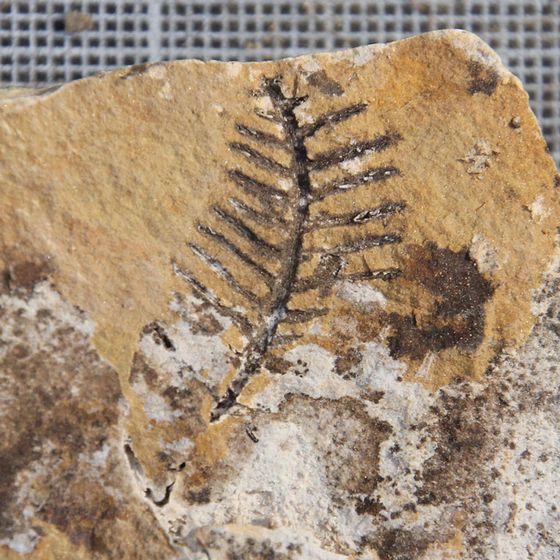
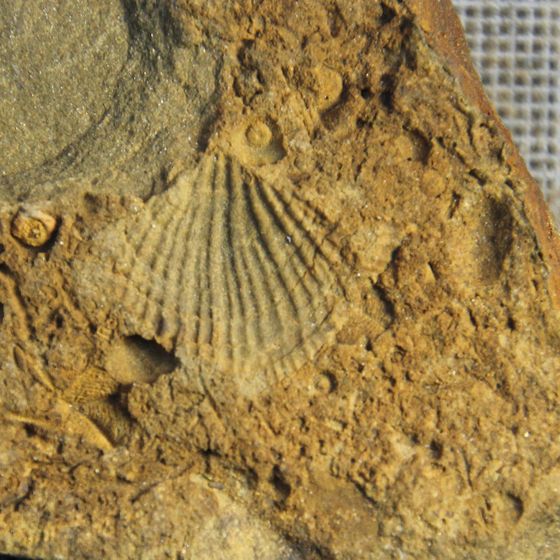
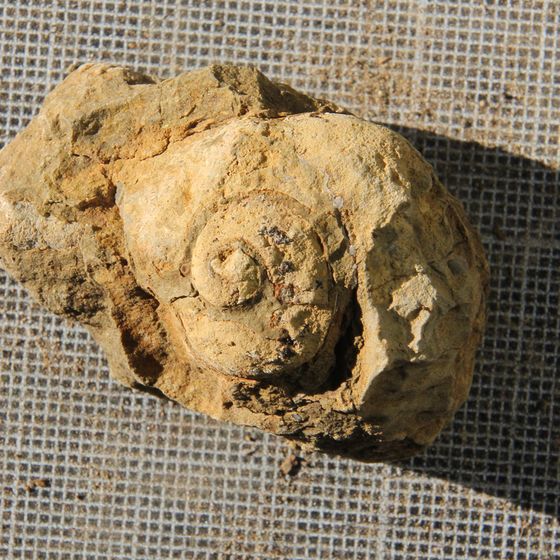

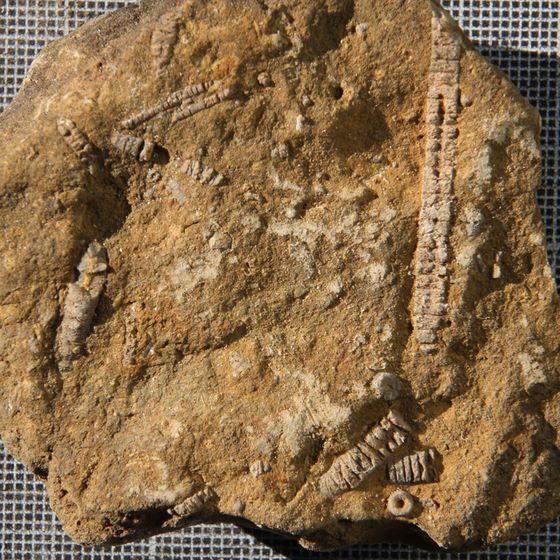
What is a fossil?
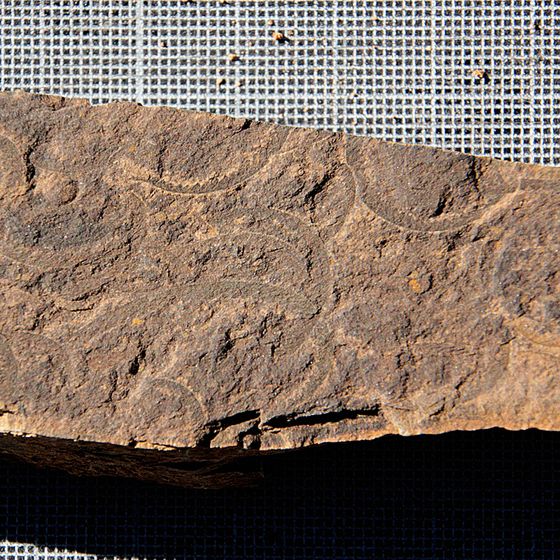
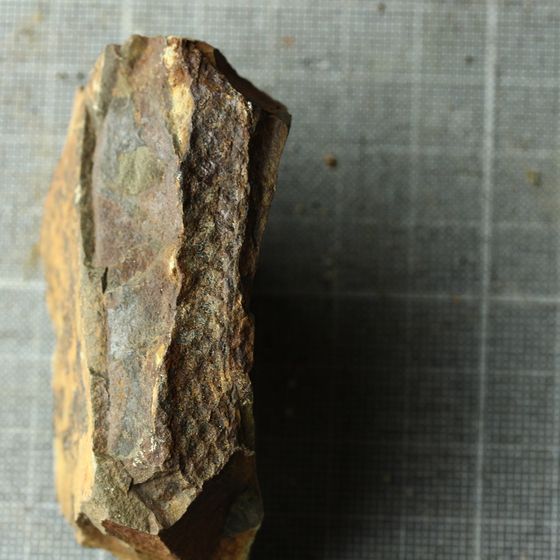
A fossil is the evidence in rock of a plant or animal from an earlier geological period. Most form when mineral-bearing groundwater replaces the original material of a shell, a bone or a piece of wood, leaving a replica in stone. Others are impressions only — a leaf, a burrow, a footprint — where the organism itself has gone and just its shape remains.
Australia has an unusually good Palaeozoic record, and the rocks of New South Wales in particular preserve three quite different worlds in turn: a warm shallow reef sea in the Silurian, a cooler shelf in the Carboniferous, and a near-polar sea and swamp forest in the Permian. This catalogue works through those three, in order.